
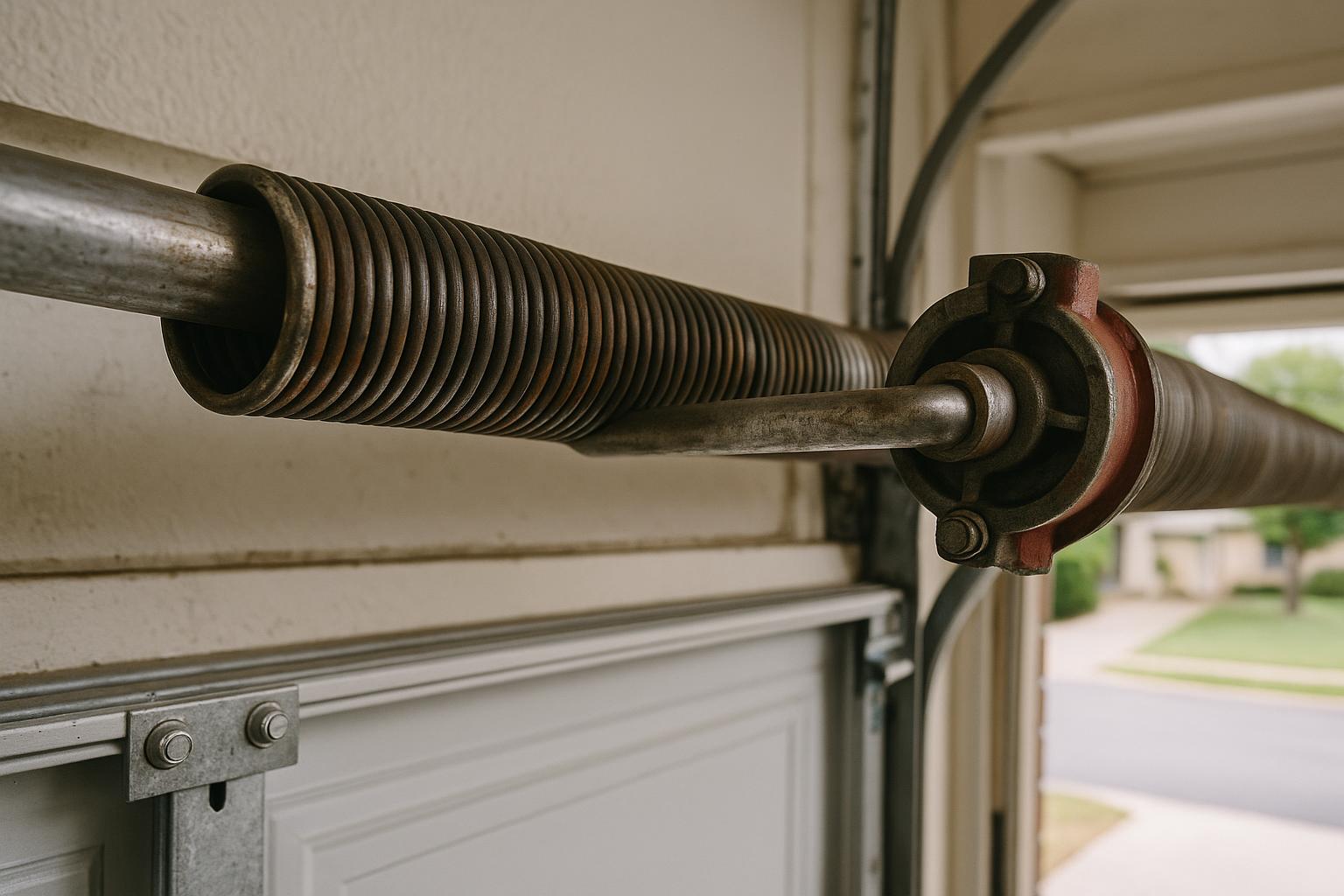
Your Garage Door Springs Are Under More Stress Than You Think
If you've never thought about your garage door springs, you're not alone. Most homeowners in Spring Hill don't give them a second thought — until the morning they press the button and nothing happens. Or worse, they hear a loud bang from the garage that sounds like a gunshot.
Garage door springs are the hardest-working components of your entire garage door system. They bear the full weight of the door — often 150 to 250 pounds or more — every single time it opens and closes. Over the years, that repeated stress causes metal fatigue, and eventually, the springs will fail.
The good news? Springs almost always give you warning signs before they break. If you know what to look for, you can schedule a replacement on your terms instead of dealing with an emergency. Here's what to watch for.
Understanding the Two Types of Garage Door Springs
Before we get into the warning signs, it helps to know which type of springs your garage door uses. Most residential garage doors have one of two types:
- Torsion springs — These are mounted on a metal shaft directly above the garage door opening. They twist and unwind to raise and lower the door. Most modern garage doors in Spring Hill use torsion springs.
- Extension springs — These run along the horizontal tracks on either side of the door. They stretch and contract as the door moves. They're more common on older installations.
Both types wear out over time, and both can be dangerous when they fail. Regardless of which system you have, the warning signs are similar.
7 Warning Signs Your Garage Door Springs Are Failing
1. The Door Feels Heavier Than Usual
Try this simple test: disconnect your garage door opener by pulling the emergency release cord, then manually lift the door about halfway. A properly balanced door should stay in place on its own. If it feels unusually heavy or immediately slides back down, your springs are losing tension and struggling to support the door's weight.
2. The Door Opens Slowly or Unevenly
When springs start to weaken, your garage door opener has to work much harder to lift the door. You might notice the door rising more slowly than it used to, or one side may lift faster than the other. Uneven movement is especially common when one of two extension springs is weaker than the other.
3. You Hear Squeaking, Popping, or Grinding Noises
Some noise during operation is normal, but new or worsening sounds are a red flag. Worn springs can produce loud squeaking, creaking, or popping sounds as the metal strains under load. If your garage door has suddenly become much noisier, don't ignore it — especially if you live in an older home in areas like Brooksville or Weeki Wachee where garage door systems may have been installed decades ago.
4. Visible Gaps in the Spring Coils
This is one of the most obvious signs, but you have to know where to look. A healthy torsion spring has tightly wound coils with no visible gaps between them. If you look up at your torsion spring and see a visible separation or gap in the coils — even a small one — the spring has already partially failed and could snap at any time.
5. The Door Won't Stay Open
If you open your garage door and it slowly creeps back down instead of staying in the open position, the springs can no longer hold the door's weight. This is both an inconvenience and a safety hazard, especially if you have children or pets who walk under the door.
6. Rust or Corrosion on the Springs
Florida's humidity is tough on metal components. Here in Spring Hill, we see a lot of garage door springs that develop rust well before they reach the end of their expected lifespan. Rust increases friction on the coils, accelerates wear, and weakens the metal. If your springs look orange or flaky, their remaining life is significantly shorter than you might expect.
7. Your Springs Are More Than 7-10 Years Old
Most standard garage door springs are rated for approximately 10,000 cycles — one cycle being a single open-and-close. If your household opens and closes the garage door four times a day, that's roughly seven years of life. If you can't remember the last time your springs were replaced, there's a good chance they're overdue.
Why You Shouldn't Wait for Springs to Break
It might be tempting to squeeze every last cycle out of your springs, but waiting for them to snap creates several problems:
- Safety risk: A breaking torsion spring releases an enormous amount of stored energy. The snap can send metal fragments flying and has been known to cause serious injuries and property damage.
- You'll be stranded: A broken spring means your garage door won't open. If your car is inside, you're stuck — and that usually happens at the worst possible time, like a Monday morning before work.
- Opener damage: If a spring breaks while the opener is running, the motor is suddenly trying to lift the full, unassisted weight of the door. This can burn out the opener motor, turning a spring replacement into a much more expensive repair.
- Emergency pricing: Scheduling a spring replacement proactively is almost always less expensive than calling for emergency service on a weekend or holiday.
Can You Replace Garage Door Springs Yourself?
We understand the DIY spirit — and for many home repairs, we encourage it. But garage door spring replacement is one job we strongly recommend leaving to professionals. Torsion springs are under extreme tension, and the specialized tools and knowledge required to safely remove and install them are not something most homeowners have on hand.
Every year, emergency rooms across the country treat injuries from DIY garage door spring repairs gone wrong. It's simply not worth the risk when professional replacement is affordable and can usually be completed in under an hour.
What to Expect During a Professional Spring Replacement
When you call a garage door professional for spring replacement, here's what typically happens:
- A technician inspects your current springs, cables, and hardware to assess the full situation.
- The correct spring size and type are selected based on your door's weight and dimensions.
- The old springs are safely unwound and removed.
- New springs are installed, wound to the proper tension, and balanced.
- The entire door system is tested to ensure smooth, safe operation.
A good technician will also check your cables, rollers, and hinges while they're there, since worn springs often coincide with wear on other components.
Keep Your Garage Door Safe and Reliable
Your garage door is likely the largest moving object in your home, and the springs are what make it manageable. If you've noticed any of the warning signs we've described — or if it's simply been years since anyone has looked at your springs — it's worth getting a professional inspection.
At Spring Hill Garage Door Experts, we help homeowners across Spring Hill, Hudson, New Port Richey, Holiday, and the surrounding areas stay ahead of spring failures with honest assessments and fair pricing. We'll tell you exactly what we find, recommend only what's necessary, and get the job done right the first time.
Don't wait for the loud bang. If something feels off with your garage door, give us a call and let's take a look before a small issue becomes a big one.