
Your Garage Door Shouldn't Sound Like That
You press the button, and instead of a smooth, quiet glide, your garage door groans, screeches, or rattles its way up the track. If this sounds familiar, you're not alone. Noisy garage doors are one of the most common complaints we hear from homeowners across Spring Hill, and while it's tempting to just crank up the car radio and ignore it, those sounds are almost always a sign that something needs attention.
The good news? Not every noise means an expensive repair. Some issues are simple fixes you can handle yourself. Others, however, are early warnings of a bigger problem — and catching them early can save you hundreds of dollars and a lot of frustration down the road.
Let's break down the most common garage door noises, what causes them, and what you should do about each one.
Grinding or Scraping Sounds
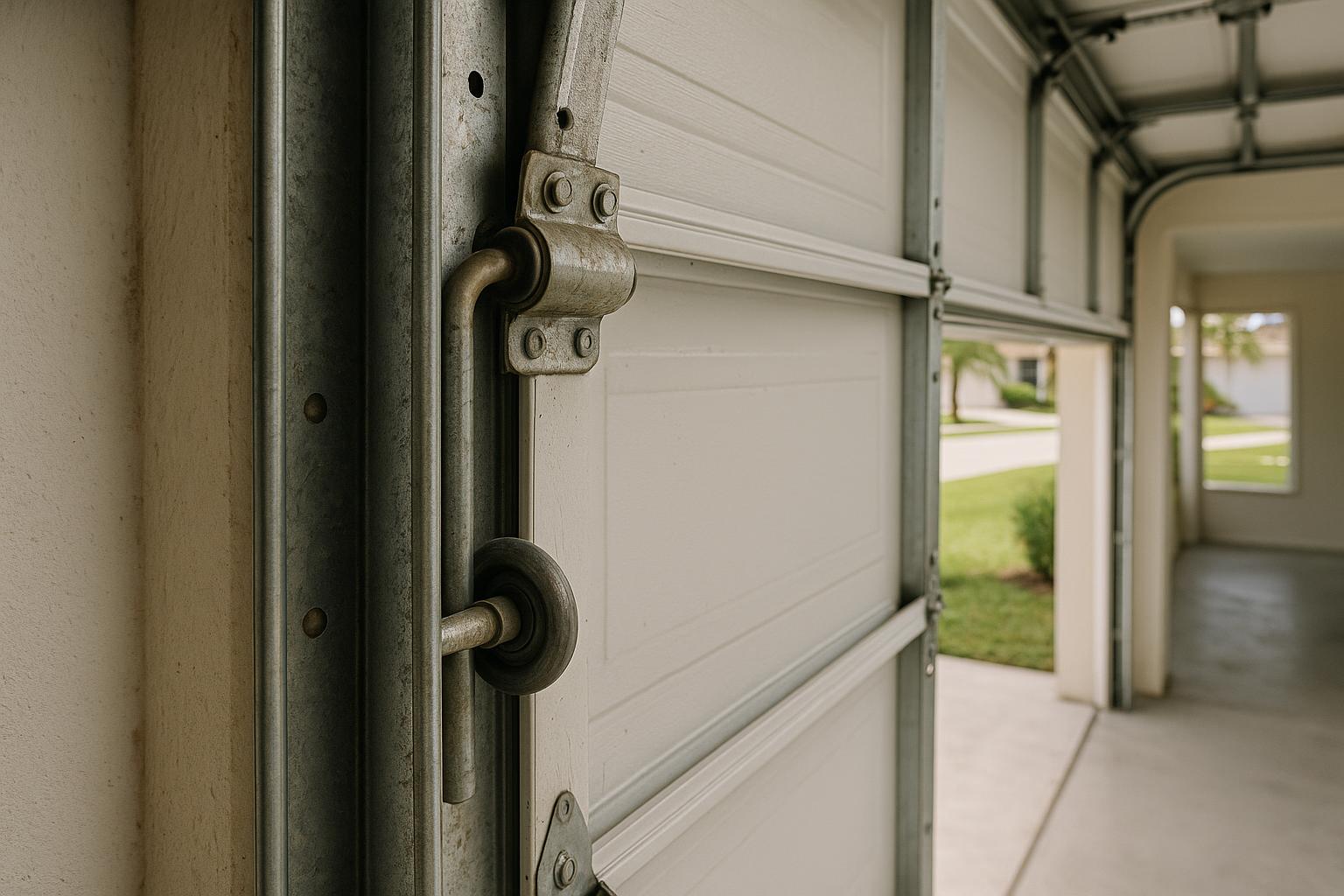
A grinding or scraping noise usually points to a problem with the tracks or rollers. Over time, metal rollers can wear down and lose their smooth surface, creating friction against the tracks every time the door moves. Dirt, debris, and even small pebbles can also get lodged in the tracks and cause that unpleasant metal-on-metal sound.
What to do: Start by visually inspecting the tracks on both sides of the door. Look for any obvious obstructions, dents, or misalignment. If the tracks look clean and straight, the issue is likely your rollers. Worn-out steel rollers can often be replaced with nylon rollers, which are significantly quieter and don't require as much lubrication. If the tracks themselves are bent or misaligned, that's a job best left to a professional — forcing a door along damaged tracks can cause the whole system to fail.
Squealing or Squeaking
High-pitched squealing is one of the most annoying garage door sounds, and it's also one of the easiest to fix. In most cases, squeaking is caused by dry or under-lubricated moving parts. Your garage door has dozens of components that move against each other — hinges, rollers, springs, and bearings — and all of them need periodic lubrication to operate smoothly.
What to do: Pick up a garage door-specific lubricant or a white lithium grease spray. Apply it to the hinges, roller bearings, springs, and the track where the rollers make contact. Avoid using WD-40 as your primary lubricant — it's great for loosening stuck parts, but it evaporates quickly and doesn't provide lasting lubrication. A proper lube job takes about ten minutes and can make a dramatic difference in how your door sounds and performs.
Rattling or Vibrating
If your garage door rattles or vibrates excessively during operation, the most common culprit is loose hardware. The constant up-and-down motion of a garage door naturally loosens nuts, bolts, and screws over time. This is especially common in older homes in Spring Hill where garage doors may have been operating for a decade or more without a tune-up.
What to do: Grab a socket wrench and tighten all the bolts on the door's hinges, brackets, and track supports. Check the bolts securing the opener to the ceiling as well — a loose opener mount is a surprisingly common source of rattling. If the chain on your garage door opener has too much slack, that can also create a rattling or slapping sound. Adjusting the chain tension according to your opener's manual usually solves the problem.
Banging or Popping Sounds
A loud bang or pop when the door starts moving is more concerning. This sound often comes from the torsion springs — the tightly wound springs mounted above the door that do the heavy lifting. When a spring is wearing unevenly or a coil is starting to separate, it can produce a sharp popping noise as tension shifts during operation.
What to do: Do not attempt to adjust or replace torsion springs yourself. These springs are under extreme tension and can cause serious injury if handled improperly. If you're hearing banging or popping from the spring area, call a garage door technician to inspect the system. Catching a failing spring early means a controlled replacement instead of a sudden snap that could damage your door or, worse, hurt someone.
Rumbling From the Opener
If the noise seems to be coming from the garage door opener unit itself rather than the door, the problem could be a worn gear, a failing motor, or vibration transferring through the mounting bracket. Chain-drive openers are naturally louder than belt-drive models, but if your chain-drive opener has gotten noticeably louder over time, internal wear is likely the cause.
What to do: For vibration issues, consider installing a vibration isolation kit between the opener and the ceiling mount. These inexpensive kits use rubber pads to absorb vibration before it transfers to your ceiling joists. If the noise is more of an internal grinding or whining, the opener's drive gear may be stripped. A technician can replace the gear assembly, or if the unit is older, it may make more sense to upgrade to a quieter belt-drive opener.
When Lubrication Isn't Enough
Regular lubrication and hardware tightening will solve the majority of garage door noise issues. But if you've done all the basics and your door is still making unusual sounds, there could be a deeper mechanical problem at play. Warped door panels, a misaligned track system, or an unbalanced door can all create persistent noise that no amount of lubricant will fix.
An unbalanced garage door is particularly important to address. You can test this yourself by disconnecting the opener (pull the red emergency release handle) and manually lifting the door halfway. Let go — if the door stays in place, it's properly balanced. If it slides up or crashes down, the spring tension is off, and the door is putting extra strain on every component in the system. That strain is likely what's causing the noise, and it will only get worse over time.
A Simple Maintenance Routine Goes a Long Way
Most of the noisy garage door calls we get in Spring Hill could have been prevented with basic seasonal maintenance. Here's a quick checklist you can follow every six months:
- Lubricate all moving parts with a garage door-specific lubricant
- Tighten all nuts, bolts, and screws on the door and track hardware
- Inspect rollers for wear and replace any that are cracked or chipped
- Clear debris from the tracks
- Test the door's balance by disconnecting the opener and lifting manually
- Listen for any new or unusual sounds during a full open-and-close cycle
This routine takes about 20 minutes and can extend the life of your garage door system by years.
Don't Ignore What Your Garage Door Is Telling You
Your garage door is one of the largest moving components in your home, and it works hard — most residential doors open and close over a thousand times per year. When it starts making noise, it's communicating that something in the system needs attention. Addressing it early keeps repair costs low and prevents inconvenient breakdowns.
If you're dealing with a noisy garage door in Spring Hill or the surrounding areas and you're not sure what's causing it, Spring Hill Garage Door Experts can help. We'll diagnose the problem, explain your options in plain language, and get your door running quietly again. Give us a call — we're always happy to help.