
That Frustrating Moment When Your Garage Door Won't Stay Closed
You press the button on your remote, watch your garage door glide downward, and then — just inches from the floor — it stops and reverses right back up. You try again. Same thing. Maybe you try holding the wall button. Still reverses. It's one of the most common and frustrating garage door problems homeowners in Spring Hill deal with, especially as our humidity and temperature swings take a toll on garage door components throughout the year.
The good news is that this problem almost always has a logical, fixable cause. The bad news is that ignoring it leaves your garage — and everything inside it — exposed to weather, pests, and potential intruders. Let's walk through the most common reasons your garage door reverses before reaching the floor and what you can do about each one.
1. Misaligned or Dirty Safety Sensors
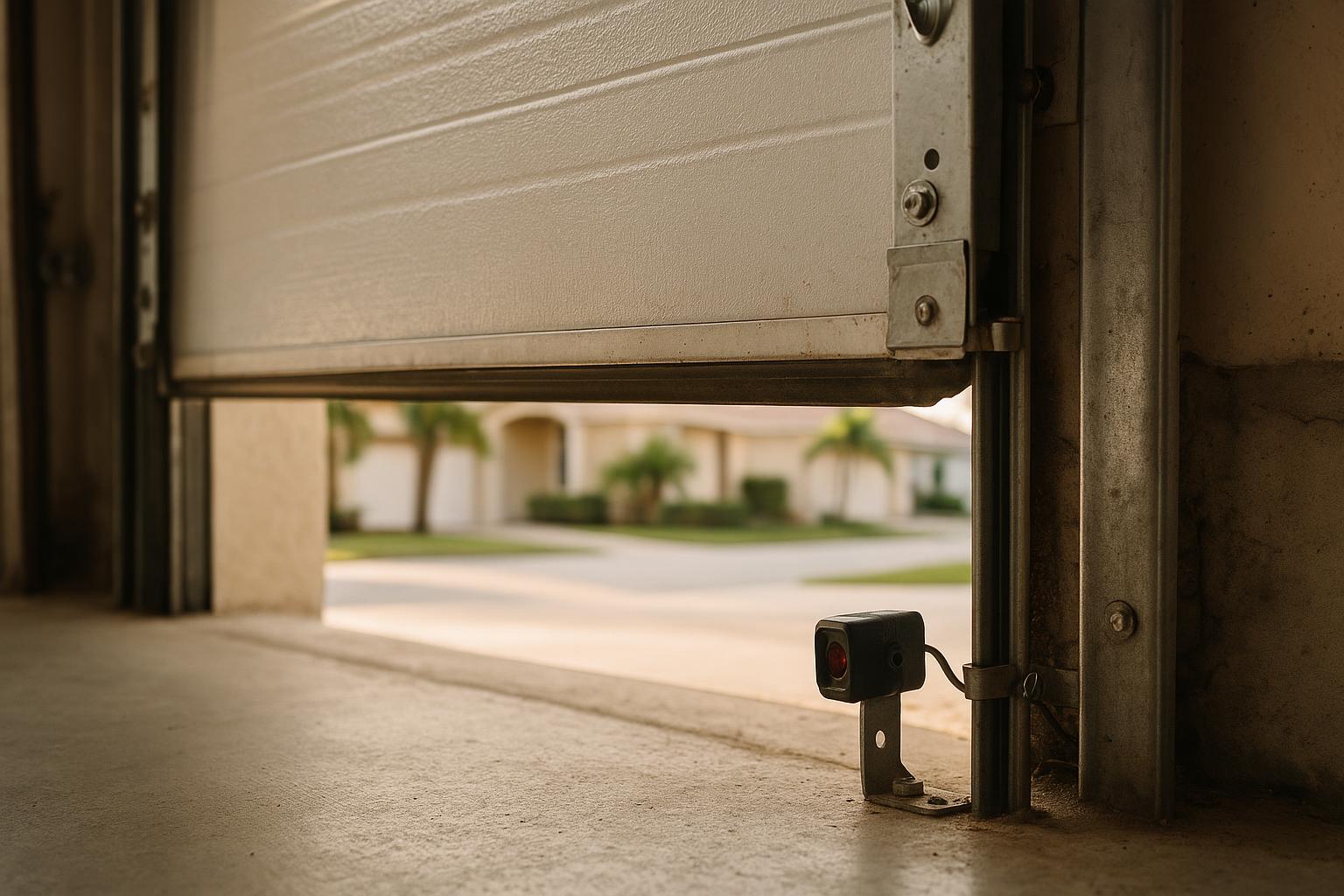
This is the number one cause of a garage door that reverses before closing completely. Every garage door opener manufactured after 1993 is required to have photo-eye safety sensors mounted near the bottom of the door tracks, about six inches off the ground. These sensors send an invisible beam across the opening, and if anything breaks that beam — a child, a pet, a bicycle — the door automatically reverses to prevent injury.
Here's the problem: these sensors are sensitive. Over time, they can get bumped out of alignment, covered in dust or cobwebs, or affected by direct sunlight glaring into the lens. In a place like Spring Hill where lawn care kicks up dirt and debris regularly, dirty sensors are incredibly common.
What You Can Do
- Wipe both sensor lenses gently with a soft, dry cloth.
- Check that both sensors have a steady light (usually green). A blinking light typically means they're misaligned.
- Make sure nothing is blocking the path between the two sensors — even a small leaf or spiderweb can trigger a reversal.
- Gently adjust the sensor brackets until both lights are solid and steady.
If cleaning and adjusting doesn't solve the problem, the sensors themselves or their wiring may need to be replaced. That's when it's time to call a professional.
2. The Close-Limit Switch Needs Adjustment
Your garage door opener has a setting called the close-limit switch (sometimes called the travel limit) that tells the motor exactly how far the door needs to travel before it's fully closed. If this setting is off — even by a small amount — the opener thinks the door has hit an obstruction when it actually hasn't, and it reverses as a safety precaution.
This issue often shows up after a new opener installation, a spring replacement, or even seasonal temperature changes that cause metal tracks and components to expand or contract slightly. Florida's heat can absolutely contribute to this kind of drift over time.
What You Can Do
Most modern openers have adjustment screws or digital settings for the travel limits. Your owner's manual will show you where these are and how to make small adjustments. The key word is small — turn the adjustment screw a quarter turn at a time, test the door, and repeat until it closes fully without reversing. Over-adjusting can cause the door to press too hard against the floor, which creates a whole different set of problems.
If you're not comfortable making this adjustment yourself, a garage door technician can dial it in quickly during a routine service call.
3. Worn or Broken Garage Door Springs
Your garage door springs do the heavy lifting — literally. They counterbalance the weight of the door so the opener motor doesn't have to work as hard. When springs wear out or break, the door becomes significantly heavier than the opener expects. The motor strains to lower the door, detects excessive resistance, and triggers a reversal.
You might also notice other signs of spring trouble: the door feels unusually heavy when you lift it manually, it slams down faster than normal, or you heard a loud bang from the garage (which is often the sound of a spring snapping).
Important safety note: Garage door springs are under extreme tension and can cause serious injury if handled improperly. Spring replacement is not a DIY job. If you suspect your springs are the issue, please call a qualified technician. Here in Spring Hill, we see spring failures year-round, and our team handles these repairs safely every day.
4. Track Problems or Obstructions
The metal tracks that guide your garage door up and down need to be clean, properly aligned, and free of dents or bends. If the tracks are damaged or if something is lodged inside them — a small rock, a piece of debris, a buildup of grime — the door can bind or stick as it travels. The opener senses this resistance and reverses.
What You Can Do
- Visually inspect both tracks from top to bottom. Look for obvious dents, bends, or gaps between the track and the wall.
- Clear out any debris you can see inside the track channel.
- Check that the rollers are moving smoothly and aren't cracked or worn.
Minor debris removal is safe to do yourself, but bent tracks and worn rollers should be handled by a professional to avoid making the problem worse or compromising the door's balance.
5. Opener Force Settings Are Too Low
In addition to travel limits, your garage door opener has force settings that control how much power the motor uses to open and close the door. If the closing force is set too low, the opener doesn't push hard enough to fully close the door, interprets the normal resistance of the weatherstripping or threshold as an obstruction, and reverses.
This can happen after a power outage resets the opener, after a new door installation, or simply because the original settings were never calibrated properly. A slight increase in the closing force usually resolves the issue, but again, small adjustments are key. You never want the force set so high that the door won't reverse when it encounters a real obstruction — that safety feature exists for a critical reason.
6. Damaged Weatherstripping or an Uneven Floor
Sometimes the issue isn't the opener or the door at all — it's what the door is closing against. If the rubber weatherstripping along the bottom of the door is torn, bunched up, or excessively thick, it can create enough resistance to trigger a reversal. Similarly, if your garage floor is uneven or has settled over time (which is common in Florida's sandy soil), the door may contact the floor unevenly and confuse the opener's sensors.
Replacing worn weatherstripping is inexpensive and makes a noticeable difference in how smoothly the door closes. For uneven floors, a garage door threshold seal can bridge the gap and give the door a consistent surface to close against.
When to Call a Professional
Some of these fixes — cleaning sensors, clearing debris, wiping down tracks — are perfectly safe for homeowners to tackle. But if you've tried the basics and your garage door still reverses, or if the problem involves springs, tracks, or opener components you're not familiar with, it's time to bring in help.
At Spring Hill Garage Door Experts, we diagnose reversal issues quickly because we've seen every variation of this problem across homes in Spring Hill, Brooksville, Weeki Wachee, and the surrounding communities. We'll identify the root cause, explain your options in plain language, and get your door working properly — usually in a single visit.
A garage door that won't close isn't just an inconvenience. It's a security risk and an open invitation for Florida's heat, rain, and wildlife to make themselves at home in your garage. Don't let a fixable problem linger. Contact us today to schedule a service call and get your garage door closing the way it should.